
Why Clothing Swaps are Good for our Mental Health, our Closets and the Planet.
You've probably had the experience of standing in front of a closet full of clothes and somehow feeling like you have nothing to wear. Modern culture tells us the answer is simple: buy something new.
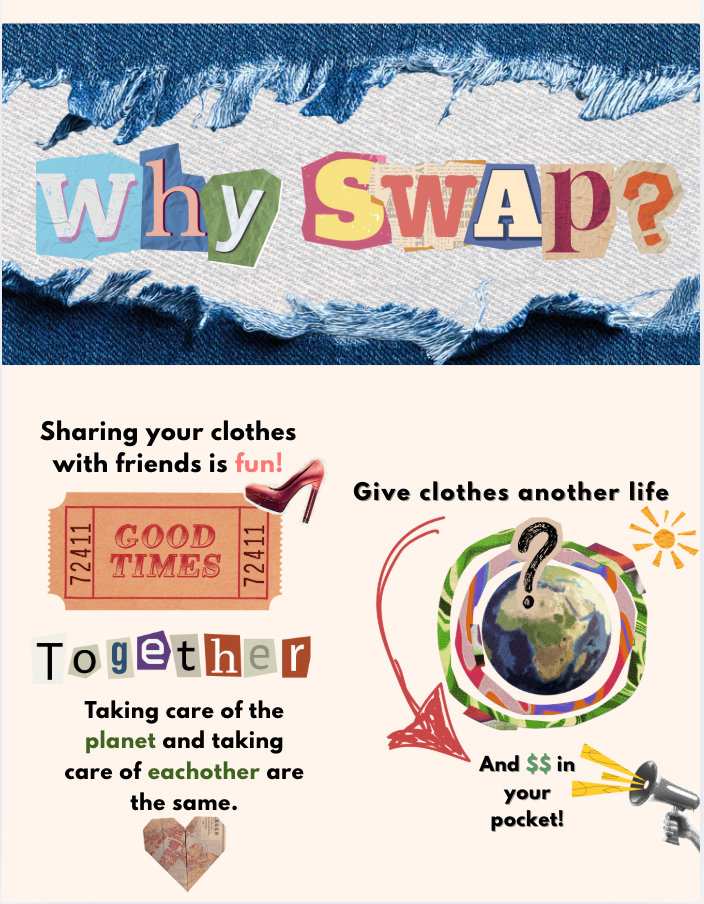
But what if the solution isn't more consumption?
Maybe what we need is less noise. Less pressure to consume, and more connection.
At Roboro, we believe clothing swaps aren't just a sustainable fashion practice. They're a form of circular fashion in action, helping repair our relationship with our wardrobes, our consumption habits, and our communities. Healing and repair rarely happen alone. Sometimes it starts with something as simple as sharing a jacket with your neighbor.
Your Closet Might Be Stressing You Out
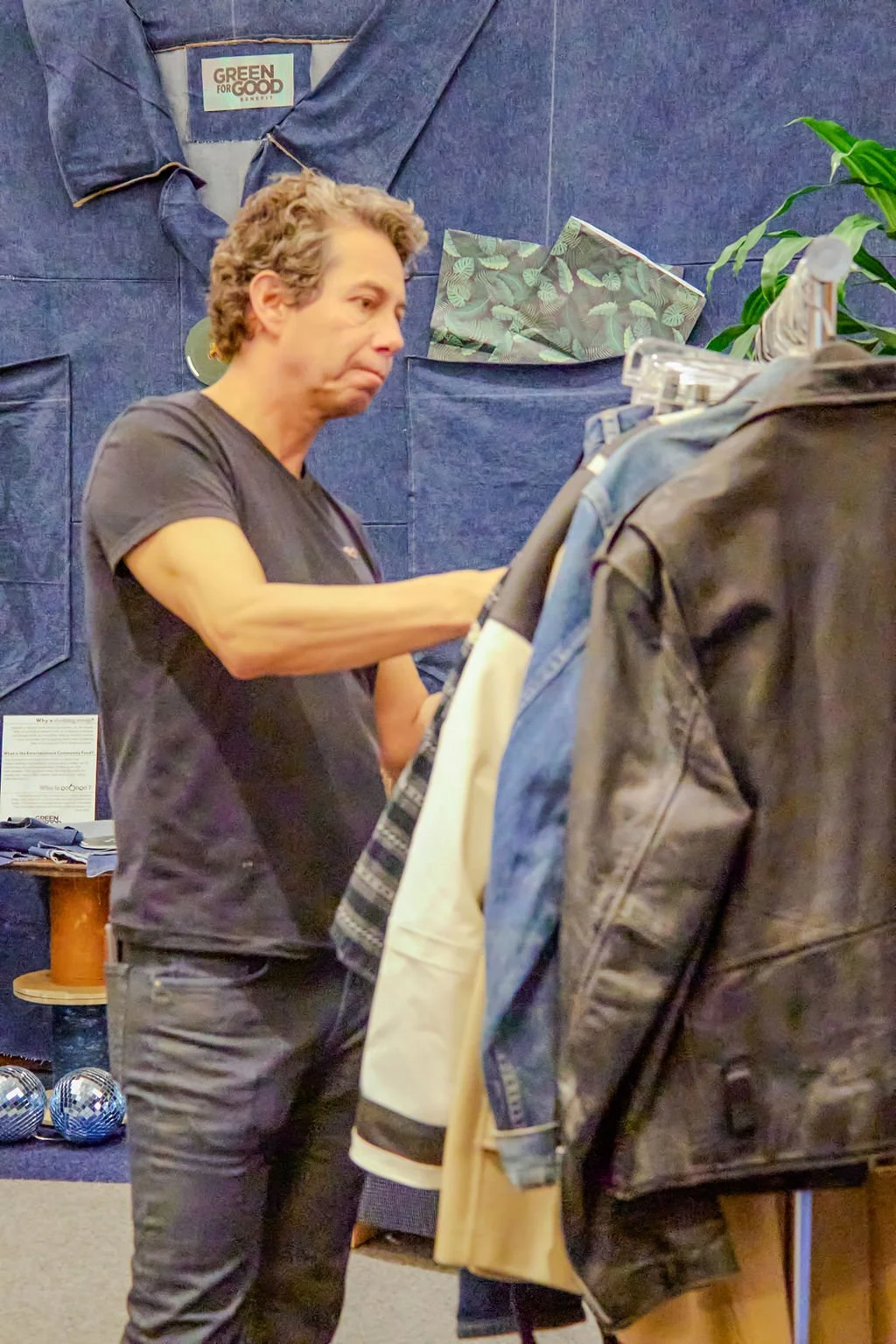
You'd think a closet packed with clothing would make getting dressed easier. Yet many of us experience the opposite: standing in front of a full wardrobe and feeling completely stuck. When we're faced with too many options, choosing an outfit can become analysis paralysis rather than self expression.
(Roboro’s 2023 Green for Good Benefit swap event. Photo by Serena Duffin)
Researchers studying home environments have found that visual clutter can contribute to elevated stress levels, by creating a constant sense that something still needs attention. An overflowing closet can quietly become one more source of mental noise.
Psychologists describe decision fatigue as the mental drain that comes from making too many choices. The brain has a limited amount of energy for decisions, and even small ones draw from that reserve.
“Should I wear this?”
“Does this still fit?”
“Why did I buy this?”
Individually, these questions feel minor. Together, they can drain mental energy before the day even begins.
Our wardrobes should support us, not overwhelm us. The goal isn't endless accumulation. It's a closet that reflects who we are, supports daily life and makes getting dressed easier.
Clarity, not quantity, is what creates a wardrobe that truly works.
Why Clothing Swaps Feel Surprisingly Good
There's a reason clothing swaps feel different from traditional shopping. Your brain can tell the difference between shopping and swapping.
Fast fashion is built around instant gratification. New arrivals, flash sales, and rapid trend cycles are designed to keep us chasing the next purchase. The reward is immediate, but often short lived, which can reinforce overconsumption.
At a clothing swap, the experience is slower and more intentional. Without branding, advertising, or curated retail displays influencing our choices, we evaluate clothing on its own merits.
Do I like it? Does it fit my style? Will I actually wear it?
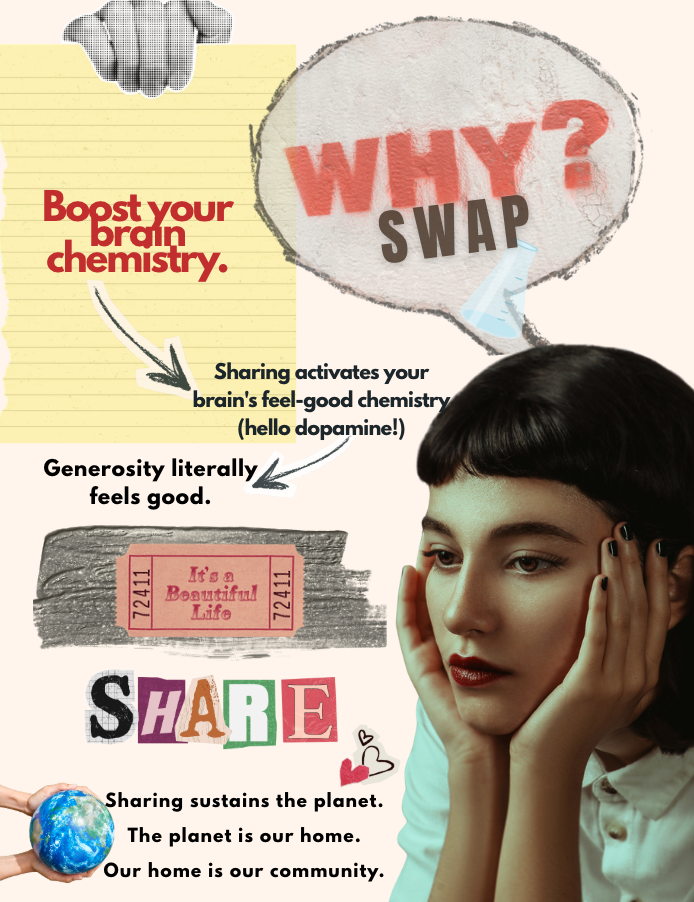
That shift matters. When we choose clothing based on genuine preference rather than marketing cues, we tend to feel more satisfied with what we bring home.
This often leads to fewer impulse purchases, less buyer's remorse, and a stronger emotional connection to our clothing.
Clothing swaps also offer something digital shopping and algorithm-driven retail can't replicate: human connection.
Clothes come with stories. A jacket may have traveled across the country. A dress may have been worn to a first date, a graduation, or a favorite concert. As garments change hands, so do memories, conversations, and connections.
What begins as clothing exchange often becomes community exchange. Clothing swaps turn consumption into participation and sustainable fashion into something lived and shared.
The Helper's High & Swaps as Collective Wellbeing
Our brains respond when we give something meaningful away. We feel good.
Psychologists call it The Helpers High. The emotional effect associated with acts of generosity and care. Passing along a favorite shirt to someone who genuinely lights up while trying it on can create feelings of joy, belonging and purpose. Shared experiences like exchanging, gifting, and receiving can strengthen social bonds and contribute to emotional wellbeing.
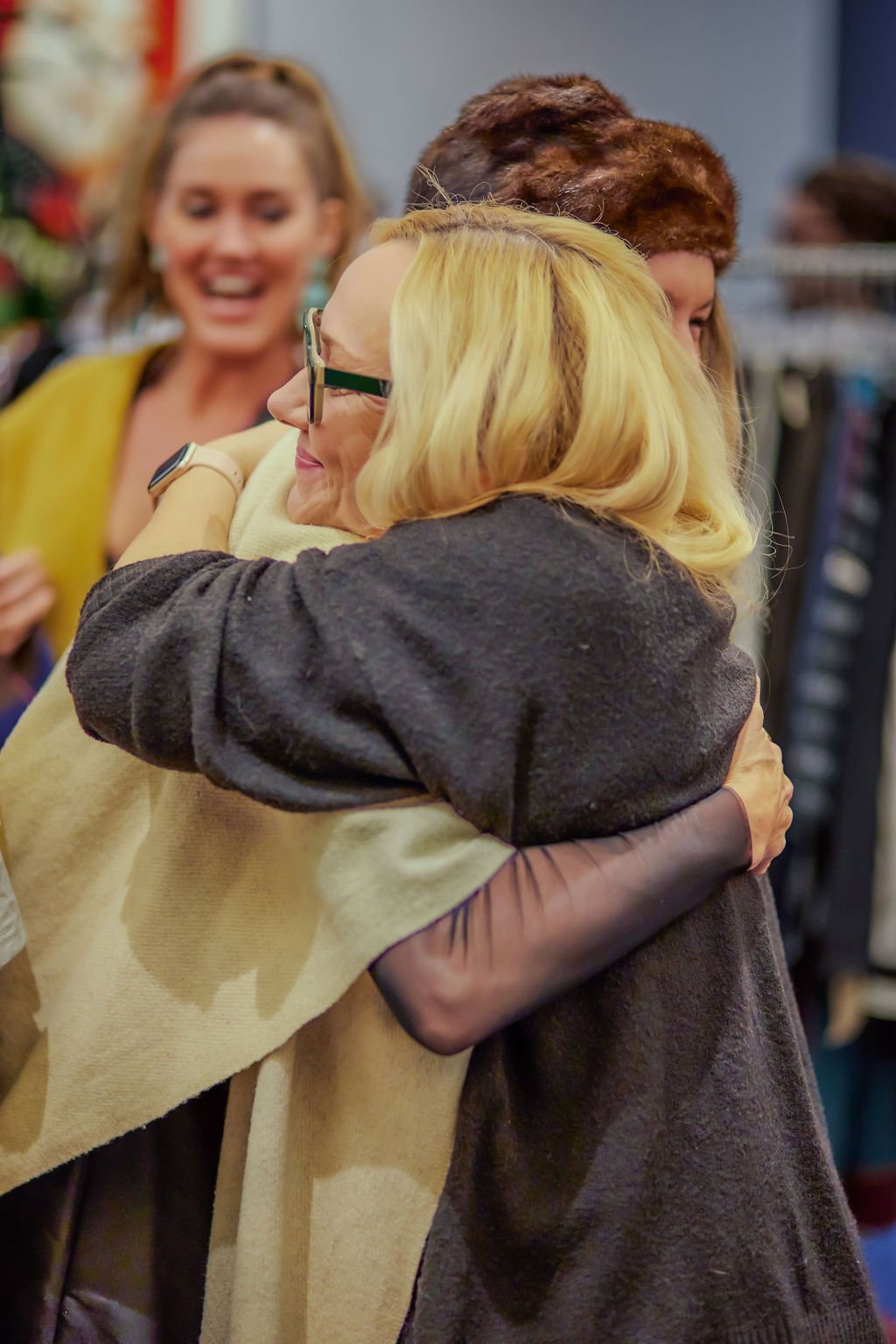
Suddenly a piece of clothing becomes more than fabric. It becomes mutual aid.
And in a world where many of us are carrying quiet stress, from climate anxiety and financial pressure, to loneliness and overwhelm, those moments of connection matter. Clothing swaps may seem like simple gatherings, but they create something much larger. People sharing stories, caring for one another, and participating in a small act of collective hope.
(Roboro’s 2023 Green for Good Benefit event. Photo by Serena Duffin)
How to Host a Clothing Swap
You don't need a large venue or a perfect setup to start a clothing swap. Begin small.
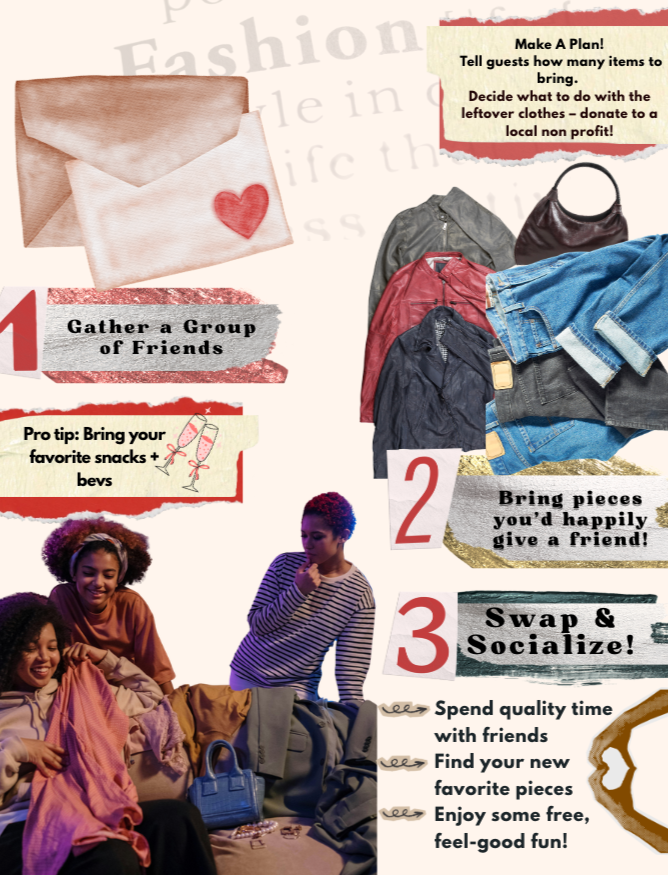
Step 1: Gather a group.
Friends, neighbors or co-workers who are interested in participating in, and contributing to a swap.
Step 2: Set simple guidelines.
Ask people to bring clean and good condition items, that they’d happily give to a friend. Quality over quantity.
Step 3: Swap & Socialize.
Fun tip: Add story tags to each item to create conversation starters and emotional connection.
examples of story tags below:
"Wore this to my first job interview."
“Bought this in my party-girl era."
“Wore to my favorite co-workers wedding."
Bonus step: Include repair
Set up a small mending station with sewing needles, thread, scissors, buttons, and scrap fabric. Repair shifts our mindset from disposal to care.
Instead of asking what should be thrown away, we begin asking what deserves care.
More Than a Swap
We're often told that sustainability is about compromise. About buying less and consuming less. Yet, some of the most meaningful sustainable behaviors give us something in return - connection and belonging.
Most of us are still navigating how to reconnect after the pandemic. Roboro's first clothing swaps began during that time as a safe, outdoor way for our neighbors in Los Angeles to share resources and spend time together, while also diverting textile waste. What started as a practical response became something deeper.
We saw how clothing swaps could spark conversation and strengthen local community networks. That same spirit continues today, as Roboro’s clothing swaps support circular economy principles, while also creating space for real human connection. Whether it be at a brewery, on a college campus or a luxury resale boutique in Presidio Heights, SF -
Repairing our relationship with clothing is only part of the work. We are also repairing our relationship with community, the planet and each other.
The next time you're standing in front of a crowded closet feeling overwhelmed, consider a different possibility. Maybe what you're looking for isn't another purchase.
Maybe it's a chance to feel more connected to what already exists around you.
Join the Movement.
If you're interested in exploring more, subscribe to the Roboro newsletter to learn about upcoming clothing swaps, repair workshops, and circular fashion events across the Bay Area, the US and globally.
Sources & Further Reading